
Got questions? Get answers here.
How do I know if I have Japanese Knotweed?
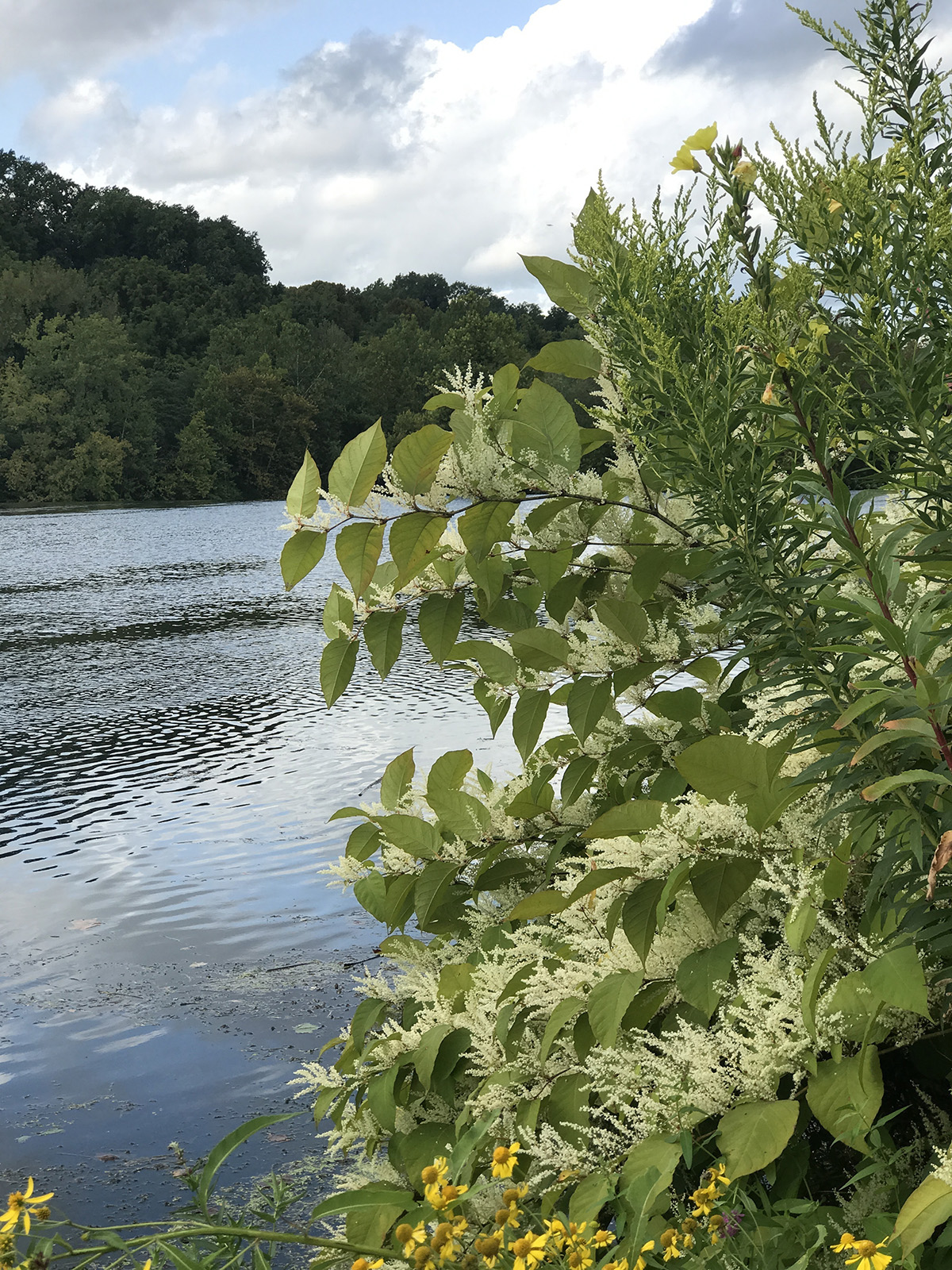
Japanese Knotweed has distinctive shield-shaped leaves, bamboo-like green stems with purple speckles, and produces red shoots in spring. If you’re unsure, don’t touch it. Take a photo and WhatsApp it to 07494 678440 (or email info@invasivelandremediation.com) for a free expert identification.
What should I do if I suspect Japanese Knotweed on my land?
Don’t cut, dig or move it yourself, as a fingernail-sized piece of rhizome can start a new infestation. Send a photo for a professional opinion and arrange a survey.
Is it illegal to have Japanese Knotweed on my land?
No, it is not illegal to have it. It becomes a problem if it is allowed to spread onto neighbouring land (the neighbour can pursue a civil nuisance claim), and you can be committing a criminal offence if you allow it to grow in the wild.
How quickly can you carry out a survey?
We can be with you in under 48 hours, including weekends.
What happens during a Japanese Knotweed survey?
Our PCA-accredited, CSJK-qualified surveyors will map all areas of knotweed and advise on maturity, risks and remediation options; flag any neighbouring issues and propose strategies; measure the infestation and take photos for the proposal, recording the appropriate RICS category for mortgage acceptance; talk you through the two Insurance-Backed Guarantee options; and provide a comprehensive proposal that forms the basis of a Knotweed Management Plan (KMP) for your mortgage lender or planning officer. Drone surveys are available where access to neighbouring infestations is limited.
How much does Japanese Knotweed treatment cost?
Costs depend on the size of the infestation, access, proximity to buildings or boundaries, and whether herbicide treatment, excavation, burial, root barriers or disposal to landfill is needed. We provide a free survey for genuine knotweed cases and then give a fixed, competitive quote with the right method for the site. If no Japanese Knotweed is found and a written absence report is required, the report costs £250 + VAT.
What damage can Japanese Knotweed cause?
It can damage buildings and structures if left unattended. Rhizomes can damage drainage systems and sewers (risking expensive repairs) and push through hard surfaces like asphalt, driveways and patios.
Can I sell a house with Japanese Knotweed?
Yes. It needn’t be as problematic as you’d think. Use a reputable contractor and make sure the eradication programme comes with a 10-year guarantee, and there should be no reason for a lender to refuse a mortgage. Be honest and upfront with buyers. We’re happy to speak with all parties in the sale.
Can I buy a house with Japanese Knotweed?
Yes, provided a suitable eradication programme is in place. Check the management plan that should have been issued and submit it to your mortgage provider. If there’s no plan, we can survey and propose one.
Will a mortgage lender lend on a property with knotweed?
Lenders may refuse a mortgage where knotweed is found close to a property. We provide PCA-accredited management plans and 10-year Insurance-Backed Guarantees that satisfy UK mortgage lender requirements, and we deal with many mortgage providers to help advise your lender.
What is included in a management plan?
The Knotweed Management Plan (KMP) covers: infestation mapping and RICS category, the recommended remediation approach, treatment timeline, monitoring schedule, and the guarantee/IBG options. Suitable for submission to a mortgage lender or planning officer.
How long does eradication take?
Eradication of Japanese Knotweed is typically achieved over 3 growing seasons, with a further 2 years of monitoring. It needs multiple site visits to apply herbicide through each growing season.
When is the best time of year to treat knotweed?
Herbicide treatment usually works best during active growth, especially late summer into autumn when the plant is drawing nutrients down into the rhizomes. Excavation can be used where a faster result is needed, such as for development, extensions or urgent property transactions. A full herbicide programme typically involves several seasons of treatment and monitoring.
Do you offer insurance-backed guarantees?
Yes. A 10-year warranty against regrowth, with separately underwritten Insurance-Backed Guarantee (IBG) options available — including KNOT New and KNOT Express depending on the project and timing — for bamboo and other invasive species too, not just Japanese Knotweed. An IBG supports our own guarantee if we can no longer honour it, giving buyers, sellers, lenders and property owners extra reassurance.
What does CSJK-qualified mean?
CSJK stands for Certified Surveyor in Japanese Knotweed, the industry-recognised qualification issued by the Property Care Association. It covers identification, risk assessment, and management planning. A CSJK-qualified surveyor’s report is accepted by mortgage lenders.
What does PCA accreditation mean for me as a customer?
PCA accreditation means we work to recognised industry standards for invasive weed control. The Property Care Association sets best-practice expectations for specialist contractors, including technical competence, auditing, reporting and customer reassurance. It helps ensure the survey, management plan and guarantee paperwork meet the standards lenders and surveyors expect.
How do I dispose of knotweed waste legally?
Japanese Knotweed waste should not go in a normal skip, green waste bin, compost heap or general rubbish. Soil or plant material containing knotweed may be classed as controlled waste and must be handled so it cannot spread. We manage excavation, transport and disposal through appropriate registered waste routes, including authorised landfill where required.
What areas do you cover?
UK-wide / nationwide. We have office bases in Leeds (North) and Rickmansworth (South).
What are your business/opening hours? What time can I call?
Our phone line, 0800 288 4967, is answered 24/7. Outside normal working hours, calls go to a message service and the team calls you back the next working day.
Do you treat bamboo as well as knotweed?
Yes. We specialise in the excavation, containment and long-term remediation of invasive bamboo, with a documented management plan, 2 years of monitoring and a 10-year guarantee.
What is Himalayan Balsam and do you remove it?
Himalayan Balsam is a fast-spreading annual plant commonly found along riverbanks, damp ground and watercourses, where it can crowd out native species and leave banks exposed when it dies back. Control usually involves cutting, pulling or targeted treatment before the plant sets seed. Contact us to discuss your site.
What is Giant Hogweed and is it dangerous?
Giant Hogweed is a highly invasive plant that can pose a serious health risk — its sap can cause severe blistering and long-lasting skin damage when exposed to sunlight, so DIY removal is not recommended. We can survey, treat and remove it safely using appropriate protective equipment, controlled working methods and professional disposal procedures. Do not touch it — contact us first.
What is Field Horsetail and can you treat it?
Yes, we can assess and treat Field Horsetail. It is a persistent, deep-rooted perennial weed with an extensive rhizome system, which makes it difficult to remove by digging alone. Treatment usually requires a managed programme over multiple visits or seasons, depending on the site and how established the infestation is.
What other invasive species do you deal with?
Japanese Knotweed, Bamboo, Himalayan Balsam, Giant Hogweed, Field Horsetail and Buddleia.
Can you help with commercial sites and development land?
Yes. We provide nationwide commercial site clearance and land preparation: vegetation stripping, tree clearance, bulk earthworks, professional waste disposal, and hazardous materials assessment including asbestos, with full SMART management plans to help secure planning permission and finance.
Can you help with residential gardens?
Yes. Residential services include a free no-obligation site survey, a management plan for your mortgage lender or planning officer, a fixed-price lump-sum quote with no hidden extras, interest-free payment options, and a 10-year warranty with an Insurance-Backed Guarantee option.
Should I try to remove knotweed or bamboo myself?
No. We strongly advise against DIY removal. A fingernail-sized piece of knotweed rhizome can spread the infestation, and bamboo rhizomes spread deep and wide; without professional excavation, root barrier membranes and responsible disposal it will regrow and can spread to neighbouring properties.
What if knotweed is coming from a neighbour’s land?
This is difficult, as the origin isn’t always easy to prove; courts work on the balance of probabilities. We can provide a site survey to address the issue and will talk to neighbouring owners to help them understand the problem.
And if you need anything else, you know who to call.